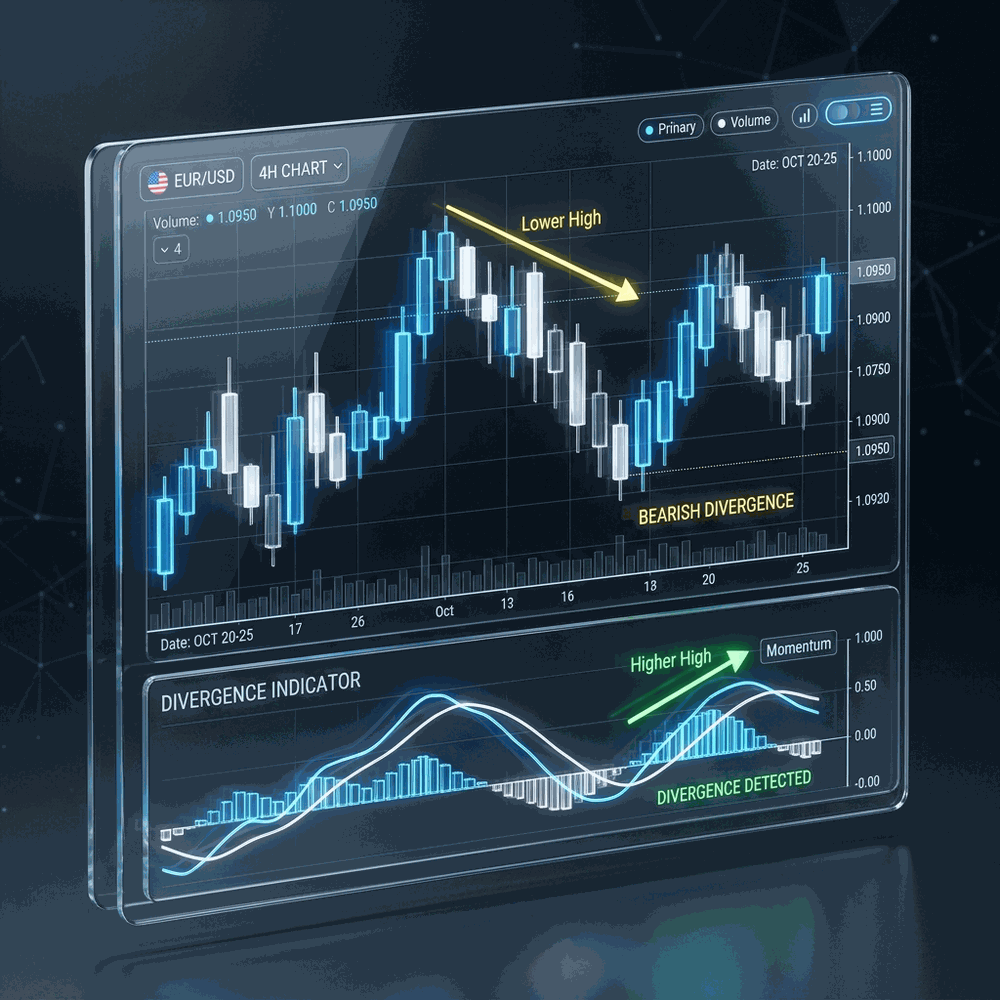
Ninety percent of traders fail not because of poor strategies, but because of poor risk management. In proprietary trading, where daily and total loss limits are strictly monitored, risk management is not just a safety feature—it is the difference between a massive payout and a suspended account. Let's explore the key risk management techniques to keep your funded account alive.
The Golden Rule: Risk-Per-Trade
Professional prop traders rarely risk more than 0.5% to 1% of their account balance on a single trade. If you are trading a $100,000 account, risking 1% means your maximum loss on any single trade is capped at $1,000. Under a 0.5% risk profile, it is capped at $500.
By keeping your risk-per-trade low, you survive a string of losses (drawdown phase) without violating your daily loss limit (typically 5%). Risking 3% or 5% per trade leaves you zero margin for error; two bad trades in a row will breach your account.
How to Calculate Position Sizes Correctly
To stay within your risk bounds, you must calculate your position size (lot size) based on your stop-loss distance. Do not guess your lot sizes! Use this formula:
Using position-sizing calculators ensures that whether your stop loss is 10 pips or 50 pips, your maximum monetary loss remains exactly the same.
Understanding the Risk-Reward Ratio (R:R)
To build a sustainable trading career, you must aim for trades with an asymmetric risk-reward profile. A minimum target of 1:2 R:R means for every $100 you risk, you stand to make $200. Under this model, you only need to win 34% of your trades to break even and generate profits.
Avoid chasing high win rates with negative R:R ratios (e.g. risking $500 to win $50). A single loss under a negative R:R strategy will wipe out weeks of hard-earned profits.
Conclusion
Treat your trading like a business. Implement strict lot sizing, protect your drawdown floor, and scale slowly. If you want to put your risk management skills to the test, browse our refundable challenge models.
Frequently Asked Questions
What is a safe drawdown buffer?
A safe buffer is keeping your daily loss under 2-3%, leaving a safety margin before you breach the 5% daily limit.
Should I use a stop loss on all trades?
Yes, a hard stop loss is mandatory for professional trading. It protects your account from sudden market spikes or slippage during news releases.